Oct 08, 2026
By: Hrynyk Dana

What You Need to Know About Farms, Equestrian Properties, and Acreages

Buying Rural in Uxbridge: What You Need to Know About Farms, Equestrian Properties, and Acreages

There's a particular kind of buyer I love working with — the one who's done the math on a 10-acre horse property, already knows what a paddock needs to look like, and asks me on the first call whether the well can handle three horses through a dry July. These buyers know what they want. What they need is someone who knows the land.

Uxbridge rural properties are not the same as buying a detached home in town, and they're not the same as buying rural land somewhere else in Ontario either. The Oak Ridges Moraine, the LSRCA, the concession roads, the proximity to Durham Forest — all of it shapes what a property can do, what you can build on it, and what it will be worth when you eventually sell. If you're seriously looking at farms, equestrian properties, or acreages in Uxbridge, here's what I think you need to understand before you make an offer.


What the Rural Market Looks Like Right Now

As of October 2026, there are roughly 46 acreage listings in Uxbridge Township, with a median list price around $1,774,500 and an average of 81 days on market — compare that to 29 days for in-town homes. That longer time on market isn't necessarily a sign of weakness. Rural properties are simply harder to match: the right buyer for a 15-acre equestrian setup with a four-stall barn, an outdoor arena, and a creek running through the back pasture is a specific person, and finding them takes time.

The price range is wide. You'll find vacant lots on rural concession roads in the low hundreds of thousands, and you'll find full equestrian operations with multiple structures pushing toward $4 million. The majority of activity — buyers actually buying — clusters in the $900,000 to $2.5 million range, which covers hobby farms, smaller equestrian properties, and residential acreages with good infrastructure.


The Three Things That Make Uxbridge Rural Different

1. The Oak Ridges Moraine

Most of Uxbridge Township sits on the Oak Ridges Moraine, and the Ontario Oak Ridges Moraine Protection Act governs what can be done with that land. The Moraine is divided into designations — Natural Core, Natural Linkage, Countryside, and Settlement Area — and what you're allowed to build, sever, or change depends entirely on which designation applies to your property.

Natural Core and Natural Linkage parcels are the most restricted. They protect the water table, forests, and wildlife corridors that make this part of Ontario what it is — and that's genuinely worth protecting. But it also means that a property that looks buildable on a map may have very limited development potential in practice. Confirming the Moraine designation is one of the first things I do when a client is looking at a rural property in Uxbridge.

2. The Lake Simcoe Region Conservation Authority (LSRCA)

The LSRCA regulates land near watercourses, valleylands, and wetlands across the Township. If a property has a creek, a pond, or a wetland — things that often make rural properties beautiful and appealing — there may be a regulated area around that feature that limits what can be built or modified within it.

This doesn't necessarily make a property a bad buy. It just means you need to understand what the regulated area covers before you decide what you're paying for. A pond that feeds into a regulated watercourse might restrict where you can place a new barn, extend a paddock, or install a septic expansion. Your lawyer and a qualified consultant can map this out during due diligence.

3. Well and Septic — Always

Every rural property in Uxbridge operates on a private well and private septic system. There is no municipal water or sewer service outside the town core. This is standard in rural Ontario, but the stakes are higher than most buyers realize until they've done it once.

A well flow rate test tells you whether the well can deliver adequate water under demand. This matters for any family, but it matters even more for an equestrian property — horses drink between five and ten gallons of water per day each, and a barn of four horses in summer is a serious draw on a well that may have been sized for a household of two. Flow rate testing is non-negotiable as a condition in any rural offer I write.

A septic inspection — not just a visual check, but a full pump, examine, and evaluation of the leaching bed — is equally essential. A failed septic bed can cost $20,000 to $40,000 to replace. The tank might look fine; the bed might not be. Budget roughly $400 to $800 for a proper inspection, and insist on a longer conditional period — 14 to 21 days — to allow time for water lab results and scheduling a septic inspector.

One more thing: test the water. E. coli and coliform testing is free through Public Health Ontario. Chemical testing for heavy metals and other contaminants costs extra but is worth doing on any property with farming history.


Buying an Equestrian Property: What to Actually Evaluate

Uxbridge has one of the strongest equestrian cultures in Durham Region. The proximity to Durham Regional Forest — 596 hectares at the top of the Oak Ridges Moraine, with designated equestrian riding on its trail network — makes this an unusually good location for horse people. Properties with direct trail access, or that back onto riding routes connecting to the Trans Canada Trail, carry a real resale premium. It's not marketing spin; it's something I see in the numbers.

When you're evaluating a specific equestrian property, here's what I look at with buyers:

Land and pasture — Plan on one to two acres of workable pasture per horse, after subtracting any regulated areas, steep grades, or wetlands. Hilly terrain looks beautiful in listing photos and leaves you less usable paddock than you'd expect.

The barn — Look at structure, ventilation, and lighting first. Standard stalls are 12x12 feet. You want a wash stall, a tack room, proper feed storage, and a hay loft or equivalent. Older barns can be in excellent condition; older barns can also have unpermitted additions that create headaches. Check the permit status of all outbuildings as part of due diligence.

Fencing — Three- or four-rail board fencing is the standard; post-and-rail, vinyl, and electric are also used. What you're looking for is horse-safe perimeter in good condition. Replacing fencing on a large property is expensive enough to warrant a serious look at every line before you close.

The arena — A functional outdoor arena is at minimum 60 feet by 120 feet with adequate drainage and safe footing. An indoor arena is a significant asset and a significant cost: building a new one runs over $200,000. If the property has one, inspect it thoroughly and price it honestly into your offer.

Zoning for your intended use — This is where buyers often get surprised. Keeping horses for personal use is generally permitted on agricultural land in Uxbridge, but commercial boarding, training operations, or lessons may require additional permissions. If your plan is to run a boarding facility or a lesson program, confirm the zoning supports it before you fall in love with the property.


Hobby Farms and Agricultural Parcels

Not every rural buyer wants horses. Plenty of Uxbridge buyers are looking for a few acres to grow something — a market garden, a pick-your-own operation, a small beef or sheep setup — or simply want a property with space, a good house, and room to breathe.

Agricultural land in Uxbridge Township runs along the concession roads, particularly north and east of the town core. These parcels tend to be more straightforwardly agricultural than the Moraine-heavy land to the west. Soil quality, drainage, and existing infrastructure (granaries, drive sheds, irrigation access) vary widely, and the listing price rarely tells you the whole story about what a working farm setup is actually worth.

One thing to confirm early: winter road maintenance on your concession road. Some roads in the Township are maintained year-round; others may not be plowed to the same standard. If you're planning to trailer horses or move equipment through the winter, this matters.


The Financing Reality

Major banks are set up for urban real estate. When it comes to rural properties, most lenders will mortgage the house and a limited land component — typically five to ten acres — and assign reduced or no mortgage value to excess acreage. If you're buying a 25-acre equestrian property, you may find that the bank is only willing to lend against a fraction of the purchase price.

This doesn't mean you can't finance a rural property. It means you need the right lender — one that specializes in agricultural or rural real estate — and you may need a larger down payment than you'd expect coming from a city purchase. Get your financing sorted and conditional approval in place before you make an offer, not after.


The Hamlets: Goodwood and Zephyr

Goodwood and Zephyr are the two main hamlets within Uxbridge Township, and both deserve mention for rural buyers. Goodwood sits in the southern end of the Township, closer to the 407, and has a distinct small community feel with good access to both Uxbridge amenities and the GTA. Zephyr is quieter, further north, and draws buyers who genuinely want to feel removed from everything — century homes on acreage, deep country quiet, and the kind of sky you don't get in town.

Properties in both hamlets can offer rural character with slightly better road access and sometimes a different zoning profile than the deeper concession roads. They're worth knowing about if you're casting a wide net across the Township.


Why Uxbridge Specifically?

I get asked sometimes why buyers choose Uxbridge over other rural Ontario communities. There are practical answers — the commute to Markham or Newmarket is manageable, the hospital is in town, the amenities are real — but I think the honest answer is Durham Regional Forest and the trail network.

For equestrian buyers especially, having 596 hectares of Crown forest with designated riding trails, connecting to the Trans Canada Trail and the Oak Ridges Moraine Trail, effectively makes your property's backyard immeasurably larger than the acreage on the deed. That's not something you can replicate by buying cheaper land somewhere else and building more paddocks.


Before You Make an Offer

Rural due diligence takes longer than urban due diligence, and it should. If you're buying an equestrian property or a farm in Uxbridge, plan for:

  • A minimum 14 to 21-day conditional period
  • A well flow rate test and water quality testing (bacteria and chemical)
  • A full septic pump, inspection, and leaching bed evaluation
  • A review of all outbuilding permit status
  • Confirmation of the Oak Ridges Moraine designation
  • An LSRCA check on any watercourse, wetland, or regulated area
  • Verification of zoning for your intended use — especially for commercial or boarding operations
  • Winter road maintenance status on your concession road
  • A pre-approval with a rural-specialist lender

None of this is meant to scare you off. The rural Uxbridge market is full of genuinely special properties, and I've helped buyers find exactly what they were looking for more times than I can count. The due diligence list is just how you make sure what you're buying is what you think you're buying.

If you're exploring farms, equestrian properties, or acreages in Uxbridge, I'd love to talk. There's a lot that's hard to see from a listing sheet, and sometimes the best properties are the ones you find by knowing where to look.


Dana Hrynyk — Uxbridge, Ontario Real Estate [email protected]

...
Sep 01, 2026
By: Hrynyk Dana

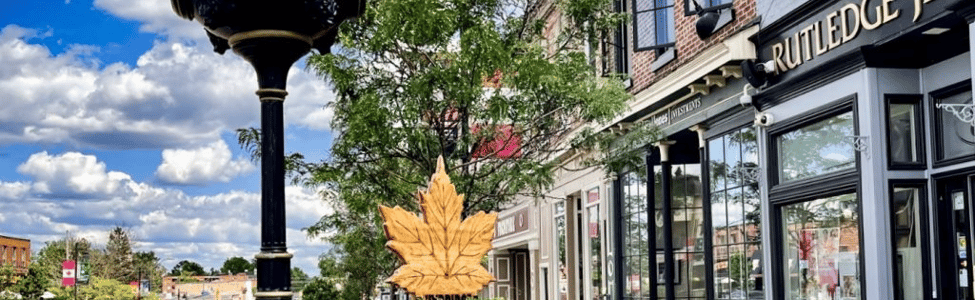
Uxbridge's main street doesn't look like it's trying to impress you, and that's exactly why it does.

Dining & ShoppingUxbridge, Ontario

Where to Eat, Shop, and Linger: Uxbridge's Main Street Scene

Uxbridge's main street doesn't look like it's trying to impress you, and that's exactly why it does. There's no chain-restaurant strip, no big-box monotony. What you'll find are shops and restaurants built over years by people who actually live here — and who want to keep living here.


That gives the whole downtown a warmth that's hard to manufacture. You feel it immediately when you walk in — the owners know the regulars, the food is made from something, and there's a reason to stay. Here's a proper rundown of what you'll find.

Start Your Morning Right

The Bridge Social is the kind of specialty café that anchors a neighbourhood — great coffee, a relaxed pace, and the sort of regulars who actually talk to each other. The Lemonade Stand draws a loyal crowd too, with a cheerful storefront and the feel of a place that's been there long enough to mean something. Either one is a fine reason to walk somewhere on a weekday morning.

Lunch & Dinner

Fig Kitchen runs as both a restaurant and a market — an increasingly rare combination that lets you eat in, then pick up something excellent to take home. 9 by Tin has built a devoted following with food that's thoughtful and unfussy. Urban Pantry fills a gap that most small towns don't have covered: quality ingredients, specialty items, and a genuine pantry experience for people who take cooking seriously.

"Fig Kitchen runs as both a restaurant and a market — an increasingly rare combination that lets you eat in, then pick up something excellent to take home."

Craft Drinks Worth the Drive

Second Wedge Brewing Co. is a proper craft brewery with a welcoming taproom — the kind of place where the beer list changes with the seasons and a Saturday afternoon disappears easily. Slabtown Cider is something else entirely: a family-run cidery established in 2017 on the Oak Ridges Moraine south of Uxbridge, making small-batch craft cider using 100% Ontario apples. They're in the middle of an ambitious project to restore over 90 acres of historic fields and plant one of Canada's largest collections of heritage heirloom apple varieties. The cider is excellent. The story behind it is even better.

The Sunday Farmers Market

The Uxbridge Farmers Market runs on Sundays and is exactly what a farmers market should be: local growers, real produce, homemade preserves, baked goods, and the kind of unhurried conversation you don't find in a grocery store. If you haven't been, go once and you'll understand why regulars treat it like a standing appointment.

Farm Stands Around Town

The farms ringing Uxbridge are part of the food culture here, not just backdrop. Brooks Farm is a beloved local institution with fresh-picked produce and the energy of a place that's been feeding families for generations. Cooper's CSA Farm and Maze offers community-supported agriculture subscriptions alongside their famous corn maze — a full-season relationship with local food. Tindall Farm & Market is the go-to for sweet corn when it's in season, and locals will tell you there's nothing quite like it.

Books, Boutiques & Home Goods

Blue Heron Book Store is an award-winning independent bookshop with a particular strength in Canadian authors and a philosophy that's summed up by their tagline: "thinking outside the books." It hosts author events, champions independent publishers, and stocks the kind of selection that makes a real bookshop different from a gift shop with novels in it. Threads Boutique and Woods Clothing offer fashion that isn't what you'd find at any mall — curated, considered, and actually local.

Low's Furniture & Home Décor has been run by the same family for three generations, which tells you everything you need to know: it's the kind of store that survives because people keep coming back. And The Passionate Cook's Essentials is a gem — cooking classes, specialty ingredients, charcuterie supplies, and a curated wine selection, all under one roof. It's the sort of shop that makes you want to have people over for dinner.

A Main Street That Changes How You Live

None of these places exist in isolation — they're the texture of daily life in Uxbridge. You stop in for coffee, run into someone from the farmers market, grab a bottle from Second Wedge on your way home. Over time, that adds up to something: a town you actually know, and that knows you back.


...
Aug 27, 2026
By: Hrynyk Dana

Looking at Uxbridge and wondering which part of town fits your life, you're asking the right Q.

Uxbridge Neighbourhood Guide: Where to Buy — and Why It Matters

If you've been looking at Uxbridge and wondering which part of town actually fits your life, you're asking the right question. Uxbridge isn't a one-size-fits-all town. It has executive streets that feel tucked away from the world, trail-side subdivisions built for families who live outside, compact condo communities designed for people who've earned a quieter pace, and rural properties that don't show up on any map until someone who knows them points the way.

This guide breaks it all down — neighbourhood by neighbourhood — so you know what you're walking into before you ever step through a front door.


First, a Word About What Makes Uxbridge Different

Uxbridge is a township of about 22,000 people in Durham Region, roughly an hour north of Toronto, and it carries a designation that most buyers don't realize is real: the Trail Capital of Canada. That's not marketing copy. There are over 300 kilometres of managed trails woven through and around the town — hiking, cycling, Nordic skiing, snowshoeing — and many neighbourhoods back directly onto them. In Uxbridge, where your backyard ends and where a trail begins often aren't different things.

The town is also genuinely self-contained in a way that surprises first-time visitors. There's a Zehrs, a Food Basics, a Vince's Market, Canadian Tire, Home Hardware, and the full complement of banks, pharmacies, and professional services. The hospital (part of the Markham Stouffville network) is on Brock Street. You don't need to leave for the everyday stuff.

For commuters: Markham runs about 30 to 45 minutes in reasonable traffic, Downtown Toronto sits between 60 and 90 minutes, and Lincolnville GO Station — the northern terminus of the Stouffville line — is roughly 20 minutes south, making the train a real option.

As of mid-2026, the average sold price in Uxbridge sits just over $1,034,000, homes are selling at about 97% of list price, and the median time on market is 29 days. It's not a panic market, but it's not soft either. Inventory is limited and well-priced properties don't sit.


The Neighbourhoods

Quaker Village — Best for Families Who Want to Walk Everywhere

Quaker Village is consistently one of the most sought-after addresses in town, and for straightforward reasons. The homes — mostly detached two-storeys and bungalows built through the 1980s and '90s — sit on mature treed lots in central Uxbridge, and nearly everything worth doing is within walking distance. Quaker Village Public School and St. Joseph's Catholic School are both close. Downtown is a short walk. The Uxbridge Museum and local parks thread through the surrounding streets.

The neighbourhood has a settled, community feel that newer developments often try to manufacture but rarely achieve. If you have children who will walk to school and you want them doing it through tree-lined streets rather than along collector roads, this is where to look.

Best for: Growing families, buyers who want established character and walkability.


Campbell Heights — Uxbridge's Most Prestigious Street

If there's one address in Uxbridge that gets mentioned in a different tone of voice, it's Campbell Heights. The homes here are executive-grade — large, on generous mature lots, centrally positioned between the downtown core and the Highway 47 commercial strip. This is old Uxbridge money meeting modern renovation: the kind of street where the houses are well-kept not because they're new, but because the people who own them take care of things.

Best for: Buyers looking for prestige, space, and a central location without sacrificing privacy.


Glen Acres — Big Lots, In-Town Location

Glen Acres is where you look when you want a proper backyard and you're still within the town boundary. The housing stock is diverse — bungalows, sidesplits, backsplits, two-storeys — all on large in-town lots that give the neighbourhood an airy, unhurried feel. It's not as polished as Campbell Heights and not as family-centric as Quaker Village, but it offers a flexibility that appeals to a wide range of buyers: retirees who want space to garden, families who want room to spread out, buyers who want something they can update on their own timeline.

Best for: Buyers prioritizing lot size without going rural; diverse housing types at varying price points.


Wooden Sticks — Golf Course Living, Executive Homes

Built between 2003 and 2005, Wooden Sticks is a tight cluster of elegant executive homes beside the Wooden Sticks Golf Club — a course well-known across Durham Region for its architectural quirk of replicating holes from famous courses around the world. The neighbourhood also sits adjacent to Elgin Park, Uxbridge's largest urban green space, which has trails, sports fields, and recreation amenities.

If the lifestyle you're picturing includes walking out your back gate for an early morning round, this is where it lives.

Best for: Golf enthusiasts, executives, buyers who want newer construction with a luxury feel.


Barton Farms — Active Families, Trail Access, Newer Stock

Barton Farms was developed in the late 1990s and 2000s with detached and link homes and a clear orientation toward outdoor living. The neighbourhood backs onto the Barton Trail, which connects into the Trans Canada Trail network — meaning from your backyard, you can be kilometres into the Uxbridge trail system within minutes. Herrema Soccer Field, a park, and a pond round out the local amenities.

It's a practical, active neighbourhood. The homes are newer than Quaker Village, the lots are reasonable, and the trail access is immediate rather than a short drive away.

Best for: Active families, buyers who want newer construction with direct trail access.


Coral Creek — Schools Nearby, Golf Course Backdrop

Coral Creek homes from the early 2000s mostly back onto or overlook the Foxbridge Golf Course, and the neighbourhood is a short walk from both Uxbridge Secondary School and Joseph Gould Public School — which matters enormously for families with older kids who prefer that their teenagers have some independence of movement.

It's a quieter, slightly more tucked-away neighbourhood than Barton Farms or Quaker Village, but the combination of school proximity, golf course views, and established landscaping makes it a consistent performer on the resale market.

Best for: Families with school-age and secondary-school children; buyers who appreciate green backdrop.


Testa Heights — Affordability, Trails, and Options

Testa Heights occupies the southeast corner of town and offers the widest mix of housing types of any Uxbridge neighbourhood — detached homes, bungalows, and the Testa Heights Apartments for renters or investors. Homes here date mostly from the mid-1980s to mid-1990s and offer some of the better entry-level price points within town limits.

The Ewen Trail runs through the area, giving it that trail connectivity that runs as a thread through so much of Uxbridge's appeal. It's not the most glamorous neighbourhood in town, but it's genuine and accessible, and for first-time buyers trying to get into the Uxbridge market, it's worth a serious look.

Best for: First-time buyers, investors, buyers needing flexibility on price.


South Balsam — Nature Access, Downsizer-Friendly

South Balsam has a mix of two-storey homes, bungalows, and maintenance-oriented options that have made it increasingly attractive to downsizers and empty nesters over the past decade. The neighbourhood backs onto township greenspace threaded with the South Balsam and Butternut Trails. Both Quaker Village Public School and St. Joseph's Catholic School are within easy reach.

It's a calm, leafy neighbourhood with a strong sense of being at the edge of town in the best sense — nature is immediately accessible, but the amenities of downtown are still close.

Best for: Downsizers, empty nesters, buyers wanting trail access with low-maintenance options.


Maplebrook Homes — For Buyers Entering the Market

Maplebrook is one of Uxbridge's newer additions — townhomes and single-family residences built from around 2015 onward, sitting north of the downtown core near the Maple Bridge Trail. The builds are modern, the price points tend to be more accessible than the established detached neighbourhoods, and the area is increasingly drawing younger buyers and young professionals who want to be in Uxbridge without the cost of a fully detached home.

Best for: First-time buyers, young families, buyers seeking modern construction at an accessible price.


Winding Trail — Bungalow Townhomes, Golf Course Setting (New)

Completed by Brookfield Residential in 2022, Winding Trail is 39 bungalow townhomes adjacent to the Wooden Sticks Golf Course with a stream and forest path running through the community. It's specifically designed around the idea of an active, outdoor lifestyle without the maintenance demands of a full detached home on a large lot.

This is a development that's been absorbed quickly — and for good reason. There's very little in Uxbridge that gives you this combination of new construction, golf course proximity, trail access, and bungalow-style living.

Best for: Retirees, downsizers, active buyers who want low maintenance and a premium setting.


Montgomery Meadows — New Bungalows and Bungalofts (2024+)

Montgomery Meadows on Reach Street — directly across from Foxbridge Golf Course — is among the newest communities in Uxbridge, offering courtyard bungalows, traditional bungalows, and bungaloft townhomes with lofts. It's built explicitly for the downsizer market, combining single-level living options with modern design and golf course views.

For buyers coming out of a larger home and looking for something that still feels generous but no longer demands a riding mower and a ladder, this is a significant opportunity in a town where new bungalow-oriented product is rare.

Best for: Downsizers seeking new construction; buyers who want single-level or loft-style living.


Fox Trail Condominiums — Golf Course Views, Boutique Scale

Fox Trail (2015) is a 46-unit community of two-storey bungalow townhouses overlooking Foxbridge Golf Course. With units running 2,335 square feet and up, these aren't small — and the golf course setting, walking distance to schools and recreation, and boutique community size (46 neighbours, not 400) give it an appeal that the larger condo developments in bigger cities can't replicate.

Best for: Empty nesters, buyers seeking upscale condo living in a golf course setting.


Just Beyond the Town Limits: Goodwood and Zephyr

No honest Uxbridge neighbourhood guide skips the hamlets. Goodwood, a 15-minute drive south toward the 407, has its own tight-knit character, a handful of local businesses, and a community feel that long-time residents are fiercely protective of. Zephyr, to the north, is quieter still — rural acreages, century homes, and the kind of deep quiet that doesn't exist anywhere closer to the city.

Both offer rural properties and estate homes that fall within the Township of Uxbridge but carry their own distinct personality. Buyers drawn to the idea of a large property with privacy, often equestrian-ready, should add these communities to any Uxbridge search.


The Rural and Estate Market

Beyond the town boundaries and hamlets, Uxbridge Township holds a substantial market for farms, equestrian properties, and private acreages. This is the part of the market that requires local knowledge more than any other — properties don't always come to market through the usual channels, and what looks equivalent on a listing sheet often isn't when you understand the land.

If rural Uxbridge is on your radar, knowing which concessions offer the best soil, the best trail proximity, or the quietest setting relative to the snowmobile corridors matters more than square footage.


Which Neighbourhood Is Right for You?

The short version:

  • Walk to school, walk downtown: Quaker Village or South Balsam
  • Executive home, prestige address: Campbell Heights or Wooden Sticks
  • Active family, trail access out the back: Barton Farms or Testa Heights
  • Golf course lifestyle: Wooden Sticks, Fox Trail, or Montgomery Meadows
  • First purchase, modern build: Maplebrook Homes or Village Square
  • Downsizing without sacrificing quality: Winding Trail, Montgomery Meadows, or Fox Trail
  • Rural land, equestrian, privacy: Goodwood, Zephyr, or rural concessions

Uxbridge rewards buyers who take the time to understand the differences. Each of these neighbourhoods has a personality, and the right one isn't the most expensive or the newest — it's the one that fits how you actually want to live.


Thinking about buying in Uxbridge? I'd be glad to walk you through any of these areas in person — there's no substitute for seeing them on the ground.

...
Aug 16, 2026
By: Hrynyk Dana

Dana Hrynyk is a trusted real estate professional serving Uxbridge and the surrounding communities

Dana Hrynyk is a trusted real estate professional serving Uxbridge and the surrounding communities. Known for her honest guidance, personalized approach, and commitment to building lasting relationships, Dana is dedicated to helping clients confidently navigate one of life’s biggest decisions. With in-depth local market knowledge and a focus on understanding each client’s unique goals, she strives to make every real estate experience as seamless and stress-free as possible. Discover more about her services on her website.

What truly sets Dana apart is her commitment to providing support that extends well beyond the transaction. In addition to guiding clients through the buying and selling process, she has cultivated a trusted network of highly respected professionals—including mortgage specialists, lawyers, home inspectors, contractors, painters, movers, and home stagers—giving clients access to reliable experts every step of the way. Whether preparing a home for market, securing financing, or settling into a new property, Dana ensures her clients have the right people in their corner.

Beyond her professional expertise, Dana is deeply involved in the community she serves. As Chair of the Youth and Vocational Committee with the Rotary Club of Uxbridge, she is passionate about supporting local initiatives & youth programs. 


Excerpt From

“Top Realtors in Canada for 2026”

Grit Daily

https://apple.news/A7LiKFtMWRSa34Os2GVaCTQ


...
Jun 09, 2026
By: Hrynyk Dana

📊 Uxbridge & Durham Region Real Estate — June 2026 Market Update

📊 Uxbridge & Durham Region Real Estate — June 2026 Market Update

I pull these numbers every month so my clients don't have to guess. Here's what's actually happening right now:


🏘️ Uxbridge — The Full Picture (Jan–Apr 2026)

The Uxbridge market has shifted meaningfully. Here's the data:

Avg sale price (all transactions): $1,095,843 Avg detached price today: $1,214,997 Avg days on market: 48 days Sale-to-list ratio: 95.41%

Year-over-year changes since Q1 2025: ↓ 11.7% — average detached price ($1,375,442 → $1,214,997) ↑ 30.2% — active listings (63 → 82) ↓ 19.3 pts — absorption rate (57.1% → 37.8%)

Where buyers are actually buying: The hottest price bands are $900K–$975K — homes in this range are selling in 26–59 days at 97% of list price. Above $1.1M, inventory is sitting longer and buyers have real room to negotiate.


🏙️ Durham Region Snapshot — May 2026

CityAvg PriceMedian DOM
Ajax$917,80031 days
Clarington$848,60042 days
Oshawa$758,90044 days
Pickering$981,50033 days
Scugog$1,038,70040 days
Uxbridge$1,429,20056 days
Whitby$950,10039 days

💰 What Did Rate Cuts Do to Your Payment?

The Bank of Canada dropped from 5.0% (2023) to 2.25% today. On a $950,000 home, that's the difference between ~$5,380/month and ~$4,630/month today.

That's $750/month — $9,000/year — back in your pocket.


🎉 My Recent Result: Manilla, ON — Sold in Under 24 Hours

In a 48-day average market, this sold in less than one day. That's what the right pricing strategy and marketing can do.

If you're thinking about selling, let's talk.


What does this mean if you're buying or selling in Uxbridge right now?

→ Buyers: More inventory, more time, real negotiating leverage — especially above $1.1M → Sellers: Pricing and presentation are everything. Overpriced homes are sitting. Well-priced, well-presented homes are still selling.

📩 DM me or visit danahrynykrealestate.com to book a strategy call. 📞 416-662-5019

#UxbridgeRealEstate #DurhamRegion #RealEstate #MarketData #JustSold #REMAXAllStars #DanaHrynyk #HomeBuyer #HomeSeller #OntarioRealEstate #MarketUpdate #Uxbridge

...
Jul 22, 2025
By: Hrynyk Dana

Real estate isn’t just about homes — it’s about people, communities, and the connections we build along the way. I’ve always believed that being truly invested in where you live means giving back to it in meaningful ways. For me, community involvement isn’t an obligation; it’s a privilege, and one of the most rewarding parts of my life outside of real estate.

As a proud member of Uxbridge Rotary, I’ve found a space where like-minded people come together with a shared goal: to make life better for those around us. Through Rotary, I have the chance to work on projects that directly impact our town and support causes that matter to so many of us.


A Place to Make a Difference

One of the most fulfilling roles I’ve taken on within Uxbridge Rotary is serving on our Youth and Vocational Committee. Investing in our youth means investing in the future of our community. We work to support local students with scholarships, mentorship opportunities, and initiatives that help them develop leadership skills and career direction. It’s inspiring to witness the energy and potential of the next generation, and I feel grateful to play a small part in helping them find their path.


“For me, community involvement isn’t an obligation; it’s a privilege, and one of the most rewarding parts of my life outside of real estate.”

Dana Hrynyk


sales representative

Community and Connection Through Events

Fundraising is another important part of what we do, and I love getting involved in planning events that bring people together while raising money for great causes. One of our most popular nights of the year is our Annual Wing and Pizza Night — a casual, fun evening that not only fills the room with laughter and good food but also helps us support local programs and charities. It’s these simple moments of community connection that remind me why I’m so passionate about being involved.


Supporting Canadian Blood Services

Outside of Rotary, I also volunteer with Canadian Blood Services, helping to organize and staff local blood donor clinics. It’s a cause that’s close to my heart — one that impacts lives in the most direct and tangible way. It’s easy to forget how critical donated blood is until someone you know needs it. Through volunteering, I’ve met incredible people, heard moving stories, and witnessed the generosity of our small-town residents time and again.

...
Feb 27, 2025
By: Dana Hrynyk

As we step into 2025, the real estate landscape shows promising signs of recovery, though challenges persist. Let’s dive into what homebuyers, sellers, and investors can expect in the coming year.


Interest Rates: A Welcome Decline

The new year brings positive news on the lending front. The Bank of Canada starts 2025 with an overnight lending rate of 3.25%, and forecasts suggest a further decline to 2.25-2.50% by year-end. This shift should bring five-year mortgage rates down to approximately 4%. While this represents significant relief from 2024’s higher rates, it’s worth noting we’re still far from the ultra-low pandemic rates that fueled the 2021 market frenzy.


Game-Changing Policy for First-Time Buyers

A major development for 2025 is the increase in the insured mortgage cap from $1 million to $1.5 million. This change is particularly significant for first-time buyers in expensive markets like Toronto and Vancouver, who can now enter the market with lower down payments. This could be the breakthrough many prospective homeowners have been waiting for.


Sales Forecast: Modest but Meaningful Growth

The combined effect of lower borrowing costs and easier market entry is expected to boost sales by 6-8% compared to 2024. We’re looking at approximately 72,600 to 74,000 properties changing hands in 2025, up from 68,500 in 2024. While this represents improvement, it’s still notably below the pre-pandemic average of 90,000 annual sales.


The Affordability Puzzle

Despite positive developments, affordability remains a significant hurdle. The Greater Toronto Area has seen remarkable population growth, but housing supply hasn’t kept pace, and household incomes haven’t matched rising housing costs. Even with improved lending conditions, buyers will need a household income exceeding $250,000 to qualify for an average-priced property in the GTA.


Enhanced Industry Regulation

The real estate industry is set for significant regulatory changes with Phase III of the Trust in Real Estate Services Act. Expected reforms include:

  • Greater transaction transparency
  • Elimination of incentives for inappropriate realtor behavior
  • Implementation of administrative penalties
  • Higher qualification standards for realtors
  • Enhanced oversight through ombudsman supervision


The Affordability Puzzle

Despite positive developments, affordability remains a significant hurdle. The Greater Toronto Area has seen remarkable population growth, but housing supply hasn’t kept pace, and household incomes haven’t matched rising housing costs. Even with improved lending conditions, buyers will need a household income exceeding $250,000 to qualify for an average-priced property in the GTA.


Looking Ahead

As we navigate 2025, the real estate market shows promising signs of recovery, though tempered by ongoing affordability challenges. While lower interest rates and expanded lending options offer some relief, the market remains constrained by the fundamental issue of affordability. Political developments and regulatory changes add layers of uncertainty but also promise greater consumer protection.

For buyers, sellers, and investors, 2025 presents a mixed bag of opportunities and challenges. The key will be carefully monitoring these trends and making informed decisions based on individual circumstances and market conditions.


...
Feb 27, 2025
By: Dana Hrynyk

In a significant move to address housing affordability, the Canadian government has recently announced several changes to mortgage rules. These modifications aim to make homeownership more accessible, especially for younger generations. Let’s break down these changes and explore how they might affect your path to owning a home. 


1. Extended Amortization Period

Starting August 1, 2024, both first-time buyers and current homeowners will have the option to choose a 30-year mortgage instead of the standard 25-year term. This change can significantly impact your monthly payments.

What does this mean for you?

Let’s look at a practical example:

  • For a home purchase of $750,000
  • Choosing a 30-year mortgage instead of a 25-year mortgage
  • Based on current 5-year mortgage rates
  • Potential savings: Approximately $300 per month

This extended amortization period allows for lower monthly payments, potentially making homeownership more manageable for many Canadians.


2. Increased Price Limit for Insured Mortgages

By December 15, 2024, the price limit for insured mortgages will increase from $1 million to $1.5 million. This adjustment reflects the reality of today’s higher home prices in many Canadian markets.

Who benefits from this change?

This change particularly benefits individuals who:

  • Have excellent employment records
  • May struggle to access a larger down payment
  • Are looking at homes priced between $1 million and $1.5 million

Previously, homes over $1 million required a minimum 20% down payment. This increase in the insured mortgage limit provides more flexibility for buyers in this price range.


Additional Measures to Support Home Buyers

The government has also introduced or enhanced several other tools to assist Canadians in their home buying journey:

  1. Tax-Free First Home Savings Account: A new savings vehicle to help accumulate funds for a down payment.
  2. Increased Home Buyers’ Plan: Enhancements to this existing program to provide more support for down payment savings.
  3. Simplified Lender Switching: Making it easier for homeowners to change mortgage providers.
  4. New Rights for Home Buyers and Renters: Additional protections in the home buying and renting process.

The Bigger Picture

These changes are part of a broader strategy aimed at:

  • Giving Canadians more time to pay off their mortgages
  • Making it easier to qualify for a mortgage
  • Encouraging the construction of new homes to increase housing supply

What’s Next?

As these changes roll out over the coming months, it’s important to stay informed and consider how they might impact your home buying plans. Whether you’re a first-time buyer or looking to make a change in your current housing situation, these new rules could open up new possibilities.

Remember, every individual’s financial situation is unique. It’s always a good idea to consult with a mortgage professional to understand how these changes apply to your specific circumstances.

Have questions about these new mortgage rules or how they might affect your home-buying journey? Don’t hesitate to reach out. We’re here to help you navigate these changes and find the best path to homeownership for you.

...
Feb 27, 2025
By: Dana Hrynyk

Buying a home is the largest transaction most people will make in their lifetime. It’s an exciting milestone, but the process can be complex.

In honor of National Homeownership Month this June, people getting ready to dive in can heed these helpful tips – the ABCs of achieving homeownership.


A: Align yourself with a trusted advisor

Working with a real estate agent you trust can make a world of difference when buying a home – especially if you’re a first-timer. A trusted advisor will go through the process with your best interests in mind, explain essential industry terms, help determine your priorities, negotiate on your behalf, and do so much more.


Experience is a top quality to consider when you’re choosing which agent to work with. (And look for a full-time professional, too. Your purchase is too important for a part-timer.) Experience can be quantified in a few different ways – like years in the industry, real estate specialties, and neighborhoods they conduct business in. What’s helpful: Not only do RE/MAX agents have the experience to get the job done in today’s market, but they also average more sales than other real estate agents.


Another important component of the trusted professional you choose to work with is their communication style. It’s smart to align with someone who is communicative and easily accessible, and who also outlines their preferred methods of contact during the homebuying process upfront.


B: Be sure your finances are in order

Ultimately, your home purchase is a financial transaction, so it’s best to analyze your financial situation – and get things in order – before you find a house you want to buy. Unless you’ll be paying cash (and if you are, congratulations!), you’ll be working with a mortgage lender who considers factors like credit score, debt-to-income ratio, and more to determine what kind of financing you qualify for.


These factors will be helpful in the pre-approval process, too, where the lender estimates how much house you can afford. This provides a framework for setting a budget and establishing your price range. In this step, make sure to budget beyond the down payment and monthly mortgage payments for the ongoing expenses of homeownership, like maintenance.


C: Consider your options

Before shopping for a house, start by making a list of wants and needs. This can help keep priorities straight as you begin looking at prospective properties that fit your lifestyle and income.

Consider what you need when it comes to space, storage, and outdoor functionality – and be realistic about which locations work for you, and which don’t. That way, you can focus your time and energy on touring places that have a higher likelihood of being your ideal match.

Need more clarity or have questions, reach out anytime Real Estate crosses your mind.

[email protected]

...
Feb 27, 2025
By: Dana Hrynyk

Have you always dreamed of a bigger home? Imagine all the ways you could use the extra space—like having a cozy library, a gym for your workout routine, or a playroom for your growing family. Upgrading to a larger space is thrilling, but it also comes with its own set of challenges. Deciding to move to a larger home is a significant life decision that requires careful consideration of financial implications, lifestyle adjustments, and long-term goals. Ultimately, purchasing a bigger house is about enhancing your quality of life in a way that aligns with your aspirations and needs.

Let’s look into the important steps when upgrading your home.


Understand Your Needs and Goals

Taking a good look at your daily routines and what you love doing at home can really shape your house hunting. For instance, if you’re someone who works from home a lot, finding a place with a peaceful spot for your office is key. You’ll want somewhere quiet, away from the hustle and bustle of household activity, with plenty of light and air to keep you focused and relaxed. It’s all about making those workdays at home as productive and stress-free as possible.

And if you’re the go-to host among your friends and family, think about how a home can cater to your love of entertaining. An open-plan layout is great for parties and dinners since it lets you prep food and drinks without missing out on the fun conversations. Plus, having a nice flow between your kitchen, living area, and an outdoor space like a patio can make your gatherings even more special, giving you and your guests more room to mingle.

Do consider life changes that might occur in the next 5-10 years, such as elderly parents moving in or even a new home-based business. Opting for a flexible layout or a home with versatile rooms can accommodate these shifts without the need for another move.


Plan Your Finances

Moving to a larger home often comes with a heftier price tag, not just in terms of the initial purchase but also through ongoing expenses like property taxes and utility bills. Take a deep dive into your finances before making such a decision. Begin by evaluating your current spending to understand how much extra you could realistically allocate to housing costs without jeopardizing your economic stability. Remember to include the expenses involved in selling your current property, such as agent commissions and closing fees, which can add up significantly.

When it comes to financing your new, larger home, most people will need a mortgage. Given the higher values at play when upsizing, securing pre-approval for a mortgage becomes a pivotal step. This pre-approval not only clarifies your purchasing power but also signals to sellers that you’re a serious and prepared buyer, potentially giving you an edge in competitive markets. However, don’t rush this process. Take the time to shop around and compare mortgage options from various lenders. While a low interest rate might catch your eye, the fine print regarding terms, fees, and flexibility can significantly affect your overall financial picture in the long run.


Sell Your Current Home

How and when you sell can really affect both your wallet and how smoothly things go. Start off by getting a real feel for what your house is worth with a solid appraisal. This step gives you a clear starting point for setting a price that’s just right—not too high that it scares off buyers, but not so low that you’re leaving money on the table.

Little fixes and tweaks around the house can make a big difference in catching a buyer’s eye and even boosting your home’s selling price. Think about quick wins like a fresh coat of paint, fixing any niggles, or sprucing up the front yard to make a great first impression. Staging your home, or setting it up to look its best, can also play a huge role. It helps buyers picture themselves living there, which can sometimes speed up a sale or even bump up the offer price.

Lastly, timing is everything when it comes to selling your old place and buying your new one. You’ll ideally want to avoid juggling two mortgages at the same time. Planning the sale of your current home around the purchase of your new one can be a bit like walking a tightrope, but with some savvy planning and negotiation, you can make it work to your advantage. This might mean working out a deal to stay in your current home a bit longer after it sells or lining up both closings back-to-back.

...
1
2
Buying (3)
Legal (2)